Why we print to order
The short answer
Because holding stock forces a studio to guess. Printing to order means nothing exists until someone wants it, which removes the discount cycle, the dead inventory and the pressure to design for what sold last season. The cost is that you wait between 11 and 26 hours of print time instead of a same-day dispatch.
Every object in a warehouse is a bet that someone will want it. Make that bet often enough and the bets start shaping the work: you print more of what sold, less of what did not, and gradually the catalog becomes a record of last season's purchases rather than a set of decisions.
We do not keep stock. When an order arrives, the piece goes on the bed, and it takes as long as it takes.
What disappears
- The discount cycle. There is no ageing inventory to clear, so there is never a reason to mark a piece down or to time a sale.
- Dead stock. Nothing gets printed that nobody asked for, which is the largest source of waste in small-batch manufacturing.
- Colour and variant sprawl. We do not need to guess which finish will move, so the catalog stays at six pieces instead of sixty.
- The pressure to design commercially. A piece stays in the catalog because it is worth making, not because there are forty of it in a box.
What it costs you
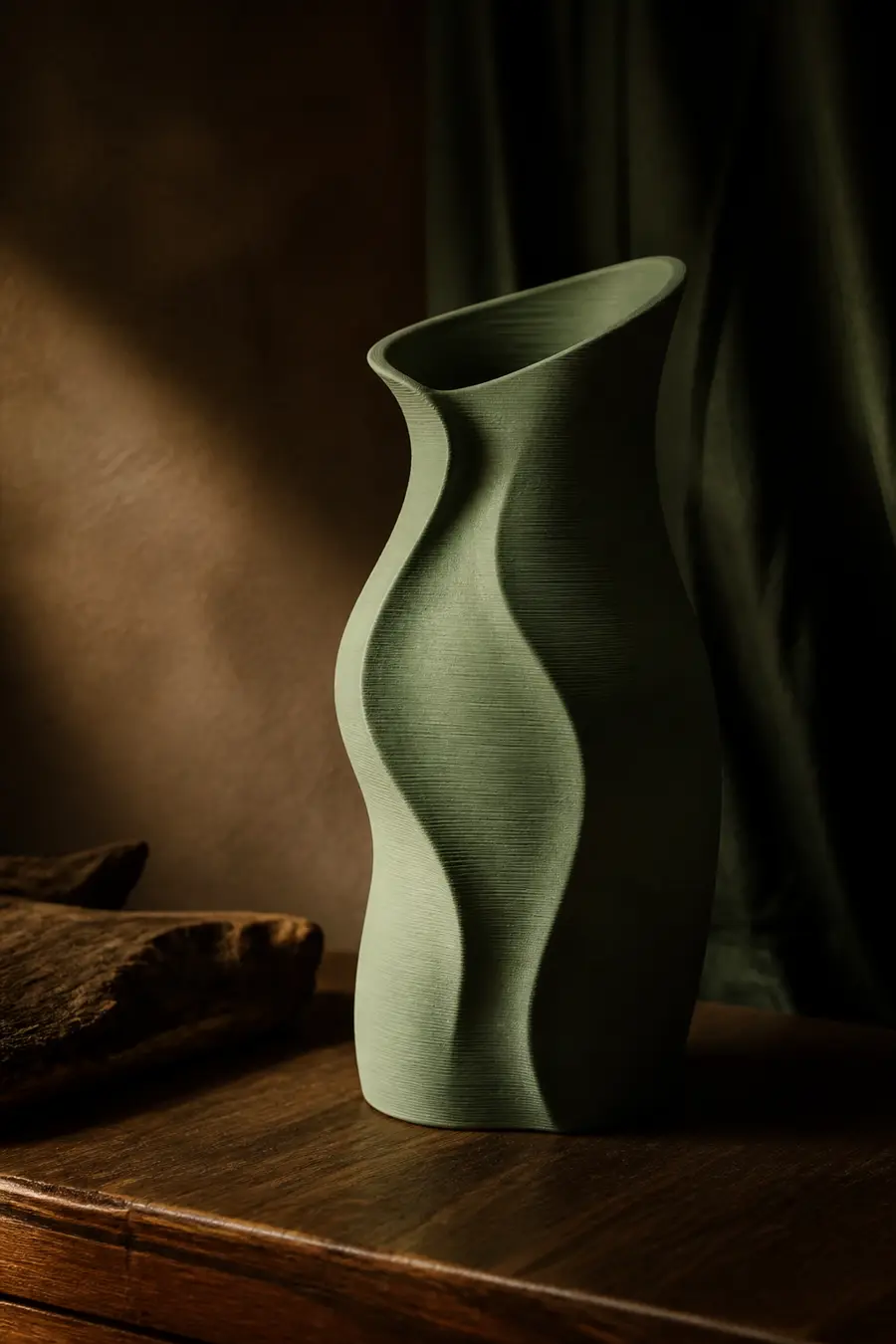
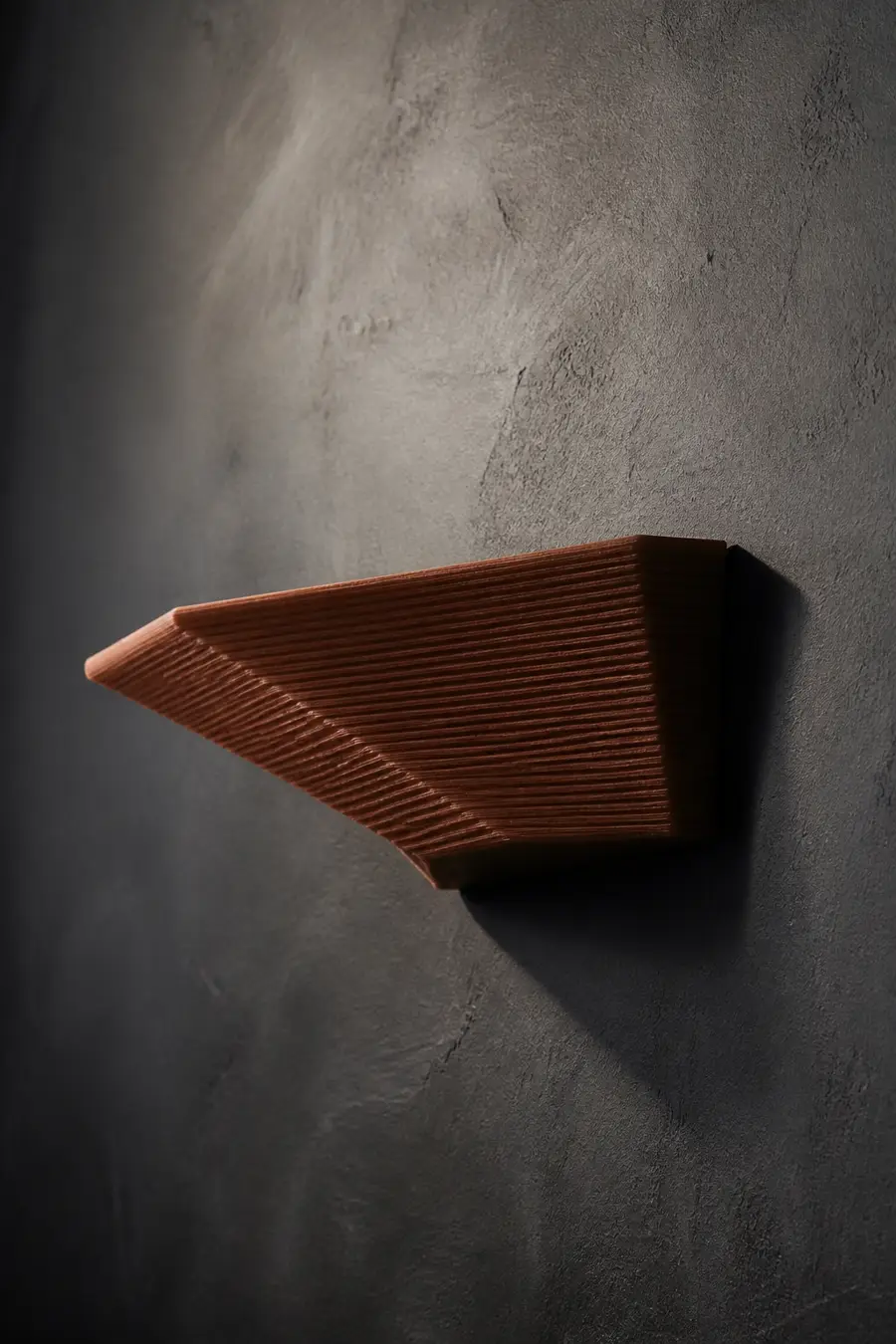
Waiting. The print times are not hidden: 11 hours for the Still Bowl, 14 for the Hex Wall Panel, 16 for the Ridge Shelf Accent, 18 for the Wave Vase, 22 for the Wave Sculpture, 26 for the Bonsai Sculpture. Then the piece is hand-finished, packed and couriered.
It also means we cannot promise next-day delivery, and we will not pretend otherwise. If you need an object in your hands tomorrow, buy something that is already sitting on a shelf somewhere. That is a legitimate need and we are the wrong studio for it.
Why it is not just an inventory choice
Printing to order changes the object, not only the logistics. A print that will be shipped to a specific person can be checked properly, because there is one of it and someone is expecting it. Batch printing rewards the opposite: get twenty off the bed, accept a proportion of imperfect ones, sort them later.
It also means the layer lines can stay visible. A batch process has to hide variation, because variation between units looks like a defect. When each piece is made for one person, the surface can be the record of how that particular piece was made.
What "reserve" means here
When you reserve a piece, you are telling us to put it on the bed. We write to you when it leaves. There is no moment where your piece is picked from a shelf, because there is no shelf.
A quiet conversation between intention and material. Every layer a sentence.Studio note