How to care for a 3D-printed object
The short answer
Dust with a dry brush, wipe with a barely damp cloth, and dry it straight away. Keep it below about 55°C, which rules out dishwashers, closed cars and windowsills that get direct afternoon sun. That is the whole routine — a printed object asks for less care than a ceramic one, not more.
A printed object is a piece of solid plastic with a textured surface. Almost everything about caring for it follows from those two facts: it does not chip like ceramic, it does not stain like unglazed stoneware, and the only real vulnerability it has is heat.
Cleaning
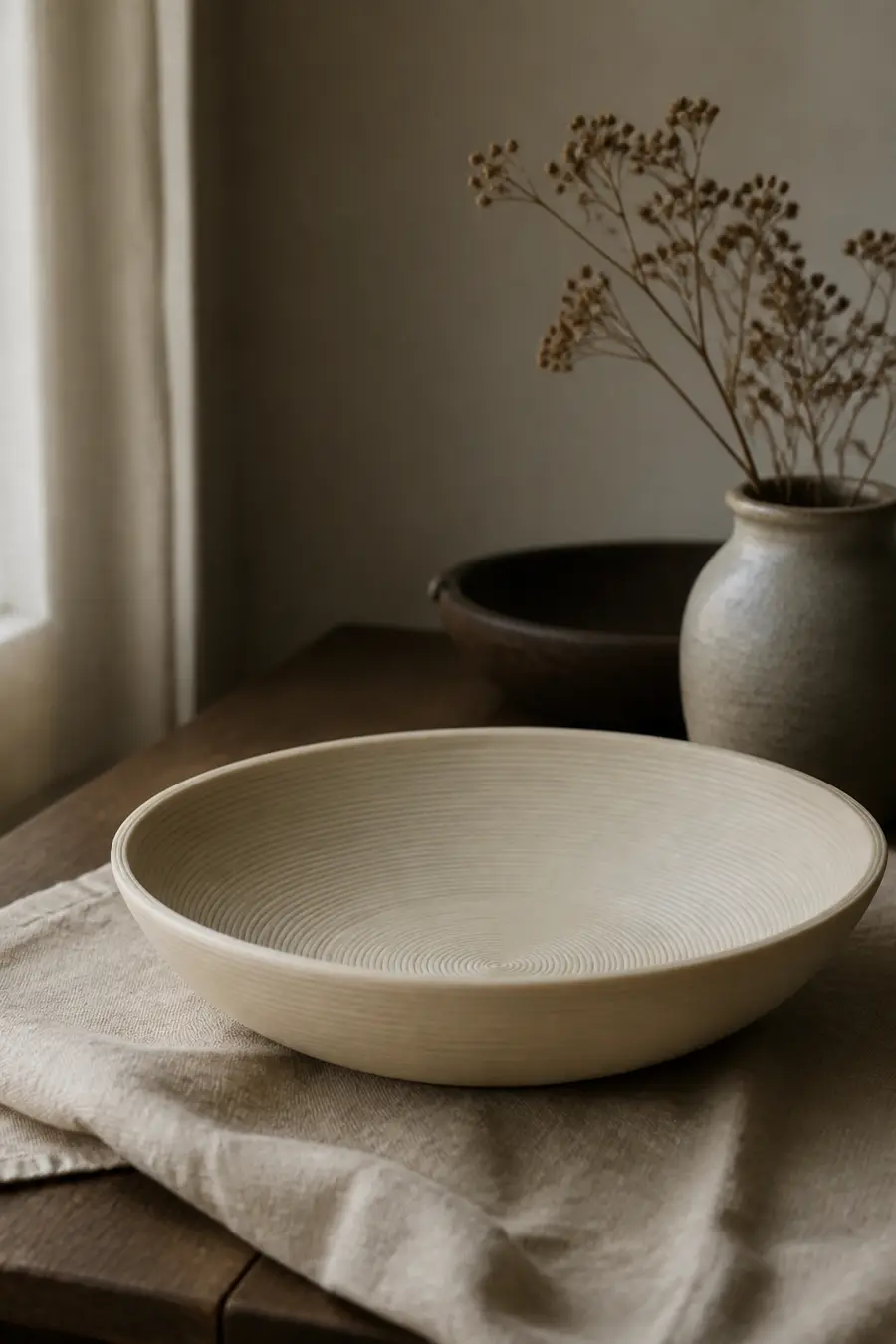
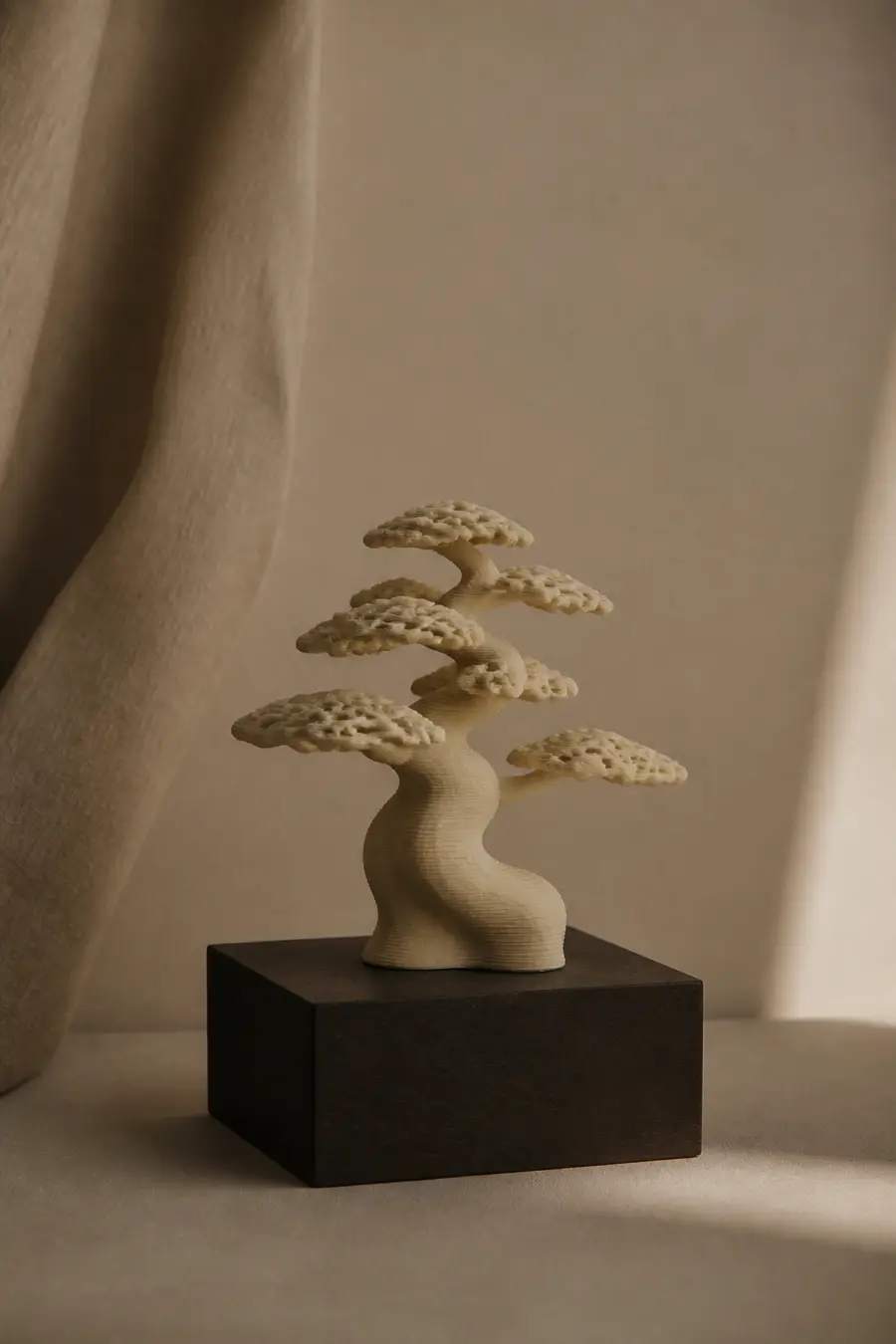
Dust is the only thing that accumulates. On flat faces a dry microfibre cloth is enough. On anything with relief — the Bonsai Sculpture's canopy, the ridges under a shelf, the inside of a bowl — a soft dry paintbrush or a clean makeup brush gets into the layer lines much better than cloth, which just rides over them.
For marks that dust will not lift, use a cloth barely damp with water and a drop of mild dish soap, then dry the piece immediately. Do not soak it and do not leave it wet.
- No dishwasher — the cycle runs hotter than PLA tolerates
- No boiling or very hot water
- No acetone, alcohol-based cleaner, bleach or abrasive cream
- No scouring pad — it will polish the layer texture unevenly and leave a shiny patch
The reason for avoiding solvents is not that PLA dissolves in them the way ABS dissolves in acetone; it is that they can craze the surface and leave a dull, clouded area that cannot be reversed.
Heat is the real limit
PLA has a glass transition around 60°C, and in practice a printed object begins to soften and can slowly deform under its own weight somewhere above about 55°C. That number is worth remembering because a surprising number of everyday places exceed it.
- A car parked in the sun — a closed cabin routinely passes 60°C in Indian summer
- A dishwasher's drying cycle
- Directly above a radiator, heat vent, oven or induction hob
- A sealed courier box left on a hot terrace all afternoon
- The top of a router, set-top box or AV amplifier
Below that threshold nothing happens at all. Normal indoor temperatures, including an Indian summer indoors without air conditioning, are well within range.
Sunlight, over years
Ultraviolet light slowly embrittles PLA and can shift its colour very slightly. This is a multi-year effect indoors, not something you will notice in a season, and it is a good reason to prefer indirect light rather than a reason to keep a piece in a cupboard. A shelf across the room from a window is ideal; a south-facing sill that gets four hours of direct afternoon sun is the one place to avoid.
Food, water and plants
We do not sell our pieces as tableware. Any printed surface has fine crevices between layers that are difficult to clean thoroughly, so a printed bowl is right for keys, coins, whole fruit and wrapped items, and wrong for loose or wet food.
For vases, use a glass liner if you want cut flowers and water, or use dried stems directly. We wrote about why at more length in the article on whether a printed vase can hold water.
For planting, the same logic applies: keep the plant in its own nursery pot with its own drainage and let the print be the outer sleeve, so damp soil never sits against the plastic.
If something breaks
PLA is rigid rather than tough, so a hard fall onto a stone floor can crack it. A clean break glues well with cyanoacrylate — ordinary superglue — and because the material is opaque and matte, a careful repair is genuinely hard to see. If a piece of ours arrives damaged or fails in a way that does not look like an accident, write to us and tell us what happened; every piece is printed to order here, so we know exactly which bed it came off.
End of life
This is where we try not to overstate things. PLA is derived from plant sugars rather than petroleum, and it is certified compostable in industrial composting facilities — the kind that hold material at high temperature for weeks. It is not home-compostable, it will not break down usefully in a landfill, and most municipal kerbside recycling does not accept it.
What that means practically: keep the object, and if it does eventually break, glue it. The most environmentally sound thing about a printed object is not the material, it is that it was made once, to order, for you, and never sat in a warehouse waiting to be discounted.