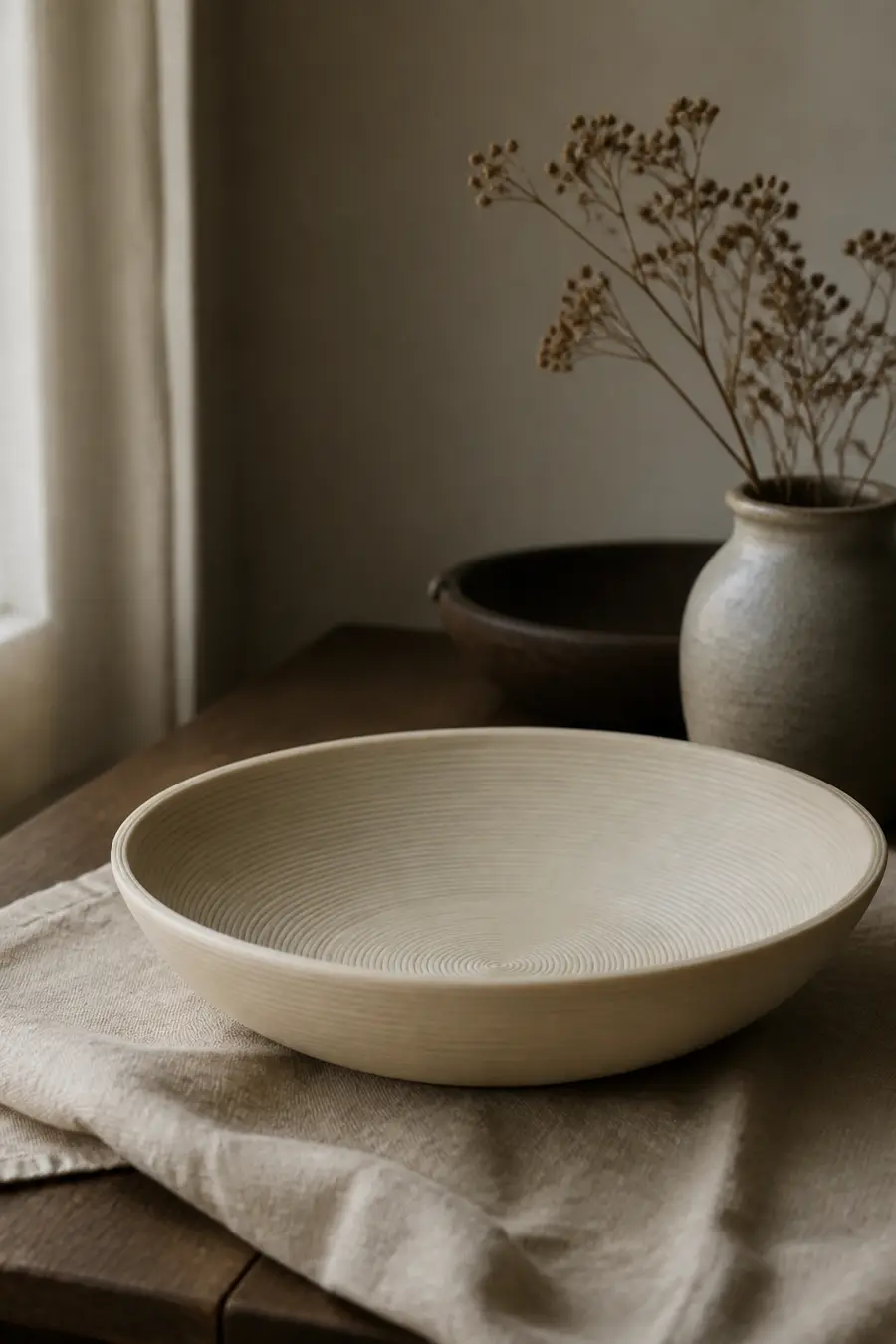
Plant-based PLA, without the lecture
The short answer
PLA is a plastic made from fermented plant sugars rather than petroleum. It is industrially compostable but not home-compostable, and it will not break down in a landfill. We use it because it is the least loaded material available to a small studio, not because it is harmless.
Material claims in this industry are usually written to end an argument rather than to inform one. So here is the plain version of what we print with, including the parts that are not flattering.
What PLA is
PLA is polylactic acid. It is made by fermenting plant sugars — typically from corn starch or sugarcane — into lactic acid, then linking those molecules into long chains. The result is a genuine plastic, with the strength and stability you expect from one. The difference from conventional plastics is the feedstock: sugar from a field rather than hydrocarbons from a well.
It prints at lower temperatures than most alternatives, gives off far less odour, and holds fine detail well, which is why it is the default material in desktop 3D printing and why the surface of a PLA print can be left unfinished and still look considered.
What "compostable" actually means
This is where most descriptions get slippery, so let us be exact. PLA is certified compostable under industrial composting conditions: sustained high temperature, controlled humidity, and weeks of it. Facilities that do this exist, but they are not common, and many do not accept consumer plastics at all.
- It is not home-compostable. A garden compost heap will not meaningfully break it down.
- It will not degrade usefully in a landfill, where the necessary heat and oxygen are absent.
- It is not marine-degradable. In water it behaves like any other plastic on a human timescale.
- It is technically recyclable, but most municipal kerbside systems do not separate it, and it contaminates PET recycling streams if mixed in.
So "plant-based" is a true statement about where the material came from. It is not a statement about where it goes.
Why we still chose it
Because the feedstock is genuinely different, the printing is genuinely low-energy compared with the alternatives available to a studio our size, and there is no solvent stage. Printing PETG or ABS at this scale means either higher temperatures throughout or acetone vapour in a small room, and neither is a trade we wanted.
The larger point is that the material is not where the environmental argument is won. It is won by making one object, once, for one person, and by making an object worth keeping. A printed piece that is used for fifteen years is a better outcome than a compostable one replaced every two.
The practical limits, in one place
| Property | What it means for the object |
|---|---|
| Softens above roughly 55°C | Fine indoors; keep it out of parked cars and dishwashers |
| Not watertight when printed | Vases need a glass liner for cut flowers |
| Fine layer crevices | Not suitable as tableware for loose or wet food |
| Slow UV embrittlement | Prefer indirect light over a sun-facing sill |
| Rigid rather than tough | A hard fall can crack it; a clean break glues invisibly |