Stillness as a design brief
The short answer
Designing for stillness means removing every feature whose job is to be noticed. In practice it produces three rules: one gesture per object, no decoration that is not structural, and surfaces that record how the object was made rather than pretending it appeared fully formed.
Most decorative objects are designed to be seen. That sounds like a tautology until you notice what it does to the form: a highlight here so it photographs well, a twist there so it reads from across a room, a colour that will stand out on a shelf beside other things. The object ends up in permanent conversation with the viewer.
The brief we work to is the opposite one. An object should be able to be looked at and also, most of the time, not looked at. Three rules follow from that, and they are the only rules we have.
One gesture per object
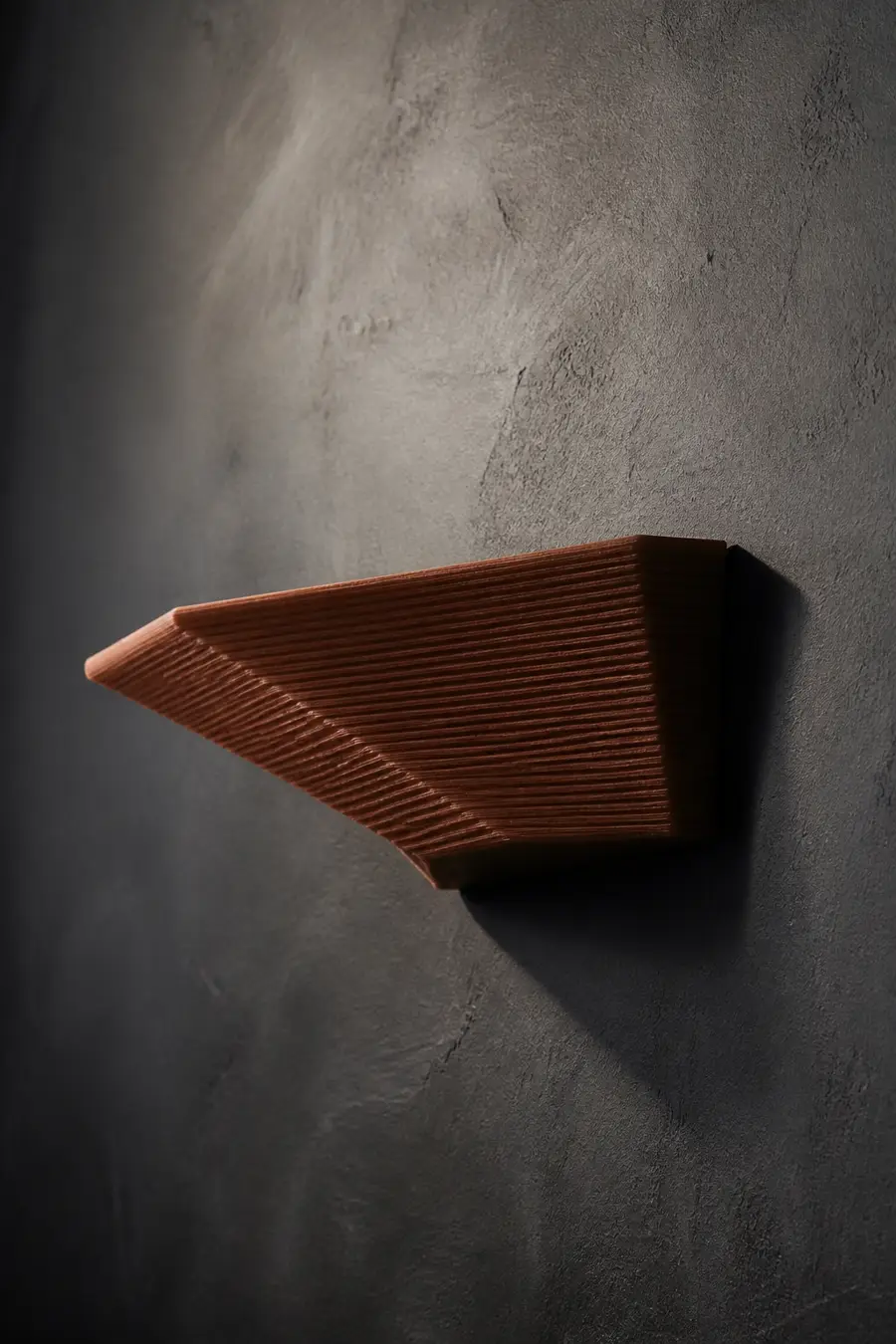
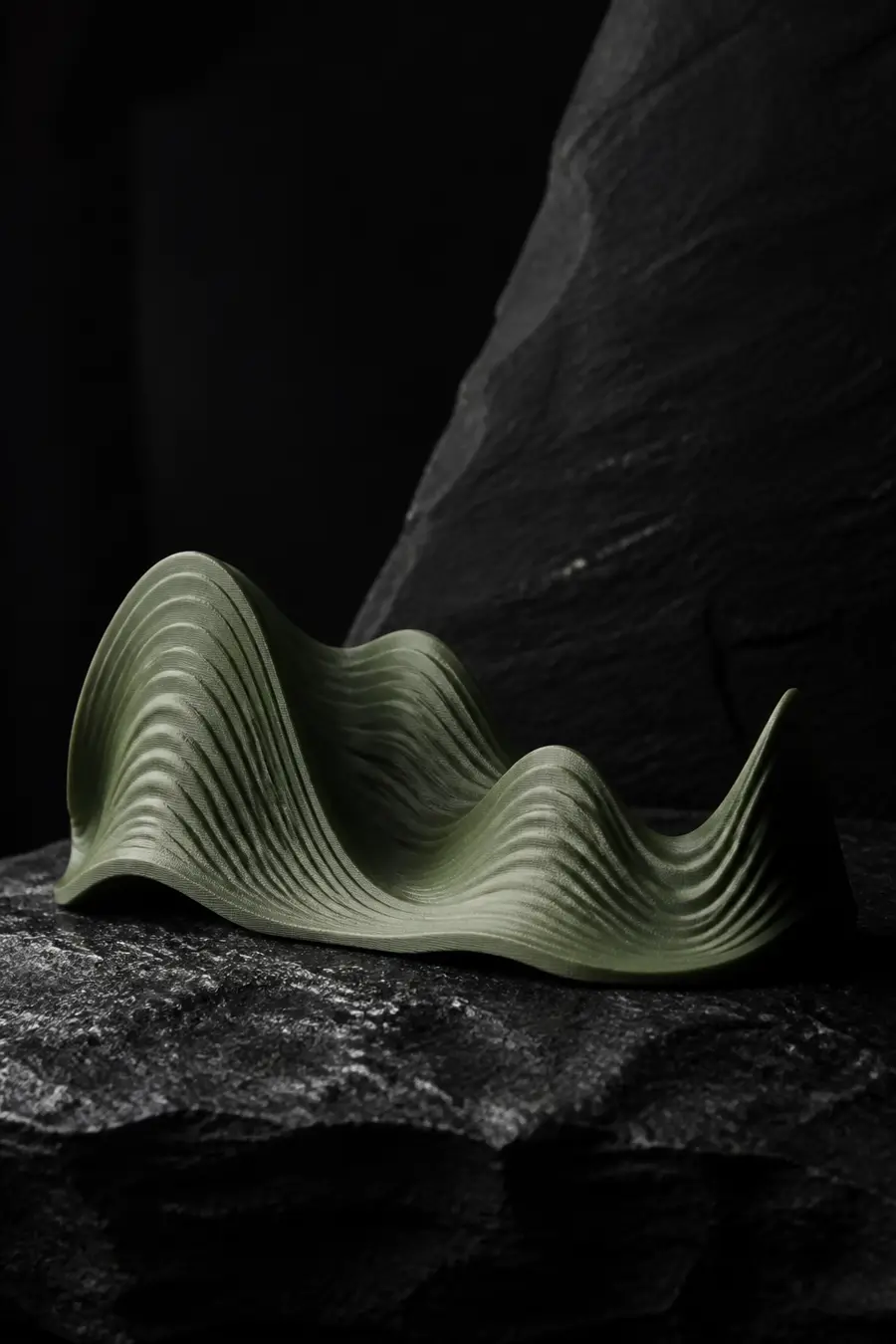
Each piece is allowed a single idea. The Wave Vase is one curve. The Ridge Shelf Accent is one cantilever, sized for one object. The Hex Wall Panel is one geometry, repeated. Nothing has a secondary feature added to make it more interesting, because a second gesture is what turns an object into a display.
This is also a discipline against the catalog growing sideways. If a new piece is only a variation on an existing gesture, it does not need to exist.
No decoration that is not structural
The ridge under the Ridge Shelf Accent is the part that carries the load. The relief on the Hex Wall Panel is what makes the shadow. The rim of the Wave Vase is thickened because a thin rim reads as fragile in the hand. In each case the visible feature is doing a job.
The test is simple: remove the feature and see whether the object stops working. If it only stops looking busy, it was decoration.
Let the making show
A printed object is made by stacking lines of material. We could sand and fill and prime and paint until that history disappeared, and the result would look like injection-moulded plastic — which is to say, like an object with no history at all.
Instead we sand only where an edge needs to feel finished in the hand, and leave the faces as they came off the bed. On the Wave Sculpture the layer lines read as tide marks, which is the closest thing to luck we have had in the studio: the way the object is made and the thing it depicts turn out to be the same pattern.
What stillness is not
It is not minimalism as a style. A white cube can be as insistent as an ornate one if it is placed to be admired. It is not fragility either — quiet objects get handled, used as paperweights, moved between rooms, and they should survive that.
And it is not emptiness. A room with nothing in it is not still, it is unfinished. Stillness needs something to be still.
A shelf that fits five objects will eventually hold nine. A shelf that fits one stays a place where you look.Studio note